How Tier-2 and Tier-3 Cities Are Driving India’s EV Auto Boom
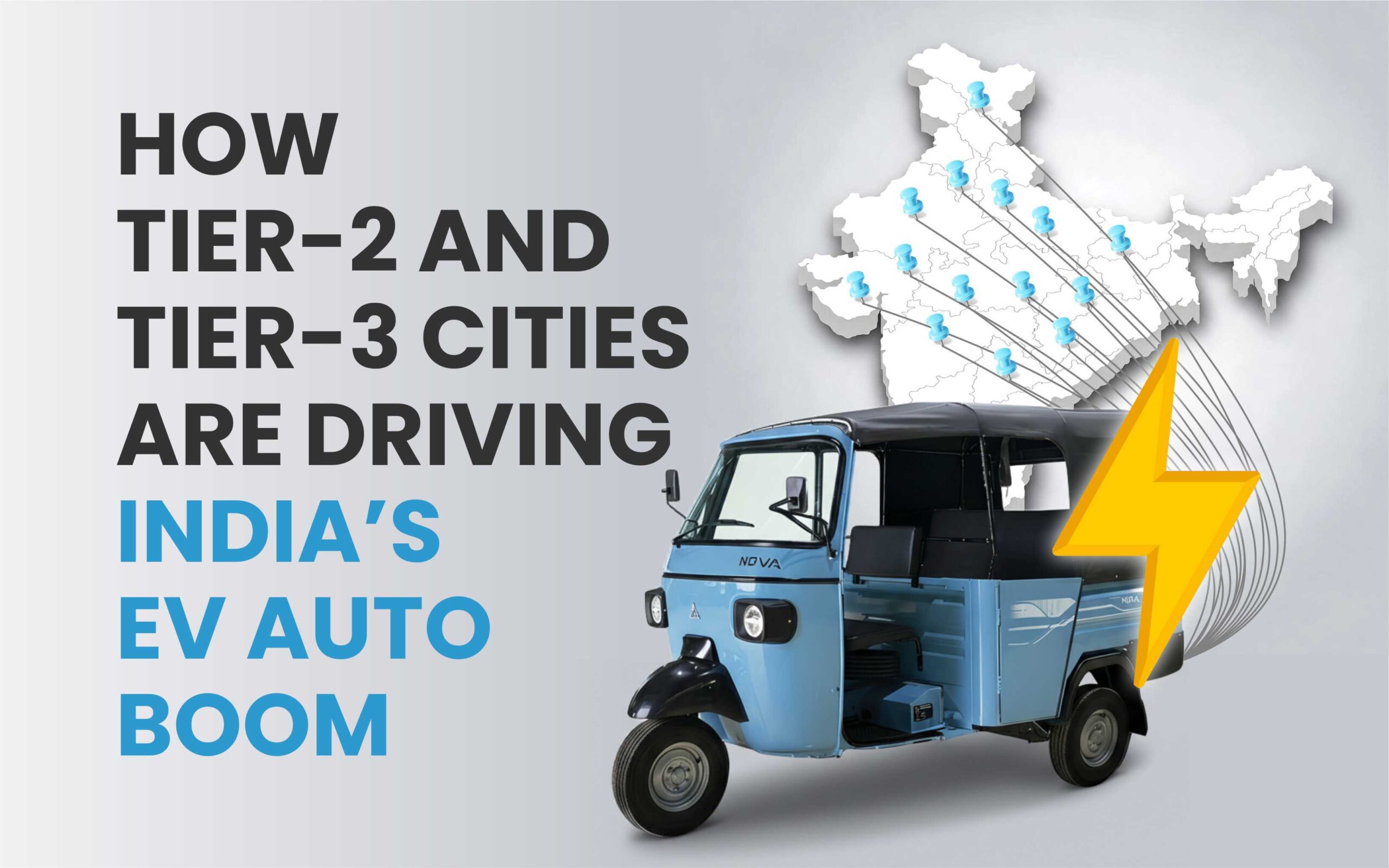
India’s electric vehicle revolution is no longer limited to metropolitan cities such as Delhi, Mumbai, Bengaluru, and Hyderabad. A new wave of EV adoption is emerging from Tier-2 and Tier-3 cities, where electric mobility is increasingly becoming a practical business and transportation solution.
From electric auto rickshaws and cargo vehicles to electric two-wheelers and commercial fleets, smaller cities are creating strong demand for affordable, efficient, and reliable electric vehicles. This shift is particularly significant for the commercial mobility segment, where lower running costs can directly improve the earnings of drivers and fleet operators.
According to the Government of India, more than 2.3 million EVs were sold in India during 2025, compared with around 50,000 in 2016. Uttar Pradesh alone accounted for more than 4 lakh EV sales in 2025, making it the country’s largest EV market.
So, why are smaller Indian cities becoming such an important part of the EV growth story?
1. Lower Running Costs Make EVs Attractive
For commercial vehicle owners, profitability depends heavily on operating costs. Fuel, maintenance, repairs, and downtime can significantly affect daily earnings.
Electric vehicles provide an opportunity to reduce several of these expenses. Electric three-wheelers, for example, can be particularly attractive for passenger transport, local goods movement, and last-mile delivery.
Earlier research from NITI Aayog and RMI found that electric three-wheelers can approach total-cost-of-ownership parity with conventional alternatives in Tier-2 and Tier-3 cities because shorter travel distances can allow smaller batteries and efficient daily operations.
For drivers and small businesses in cities where every kilometre matters, lower operating costs can make EVs a compelling alternative to conventional fuel-powered vehicles.
2. Electric Three-Wheelers Are a Perfect Fit for Smaller Cities
One of the biggest drivers of India’s EV boom outside metropolitan areas is the growth of electric three-wheelers.
Tier-2 and Tier-3 cities often have a combination of short-distance passenger routes, local transportation requirements, market deliveries, and last-mile logistics. These applications are well suited to electric three-wheelers.
Electric autos can serve:
- Local passenger transportation
- Last-mile connectivity
- E-commerce deliveries
- Grocery and FMCG distribution
- Small-business logistics
- Market-to-market transportation
- School and institutional transportation
- Short-distance cargo movement
The International Energy Agency reported that India remained the world’s largest electric three-wheeler market in 2025, with electric three-wheelers accounting for more than two-thirds of three-wheeler sales. Indian electric 3W sales increased approximately 15% from 2024 to nearly 800,000 vehicles.
This demonstrates why the electric three-wheeler segment is central to India’s broader EV transition.
3. Tier-2 and Tier-3 Cities Have High Commercial Mobility Demand
Metropolitan EV adoption is often associated with private cars and personal mobility. In smaller cities, however, the use case can be more commercially focused.
A large number of people depend on autos, small commercial vehicles, loaders, and delivery vehicles for their livelihoods. Consequently, an electric commercial vehicle is not simply a transportation choice—it can become a business asset.
For example, an electric passenger auto can help a driver transport customers throughout the day, while an electric cargo vehicle can support deliveries for retailers, distributors, logistics companies, and local businesses.
This makes the commercial electric vehicle segment particularly important for India’s smaller cities.
4. Government Support Is Expanding EV Adoption
Government initiatives are also helping create an environment for faster EV adoption.
The PM E-DRIVE Scheme supports electric mobility across multiple segments, including electric two-wheelers, electric three-wheelers, electric buses, ambulances, and trucks. As of January 27, 2026, more than 22 lakh EVs had been sold under the scheme, including 19.19 lakh electric two-wheelers and 2.93 lakh electric three-wheelers.
The government has also extended the overall PM E-DRIVE scheme until March 31, 2028, while subsequent notifications have modified support for specific vehicle categories. Buyers and businesses should therefore check the latest eligibility requirements and applicable incentives before making a purchase.
Beyond vehicle incentives, government-supported electric bus initiatives are also expanding their reach to smaller cities. Tier-2 and Tier-3 cities are being covered under the PM-eBus Sewa programme, which targets the deployment of 10,000 electric buses.
5. EV Charging Infrastructure Is Gradually Expanding
Charging infrastructure has historically been one of the major concerns surrounding EV adoption.
However, the charging ecosystem is expanding across India. As more electric vehicles enter smaller cities, businesses, dealerships, fleet operators, and charging providers are increasingly developing charging solutions suited to local requirements.
For commercial operators, charging can also be planned around daily operating patterns. Vehicles that return to a fixed location at the end of the day can often be charged overnight, reducing dependence on public charging infrastructure.
For businesses operating electric cargo vehicles and passenger autos, access to reliable charging can therefore become part of an efficient daily operating strategy.
6. Better EV Technology Is Increasing Consumer Confidence
Early EV adoption was sometimes limited by concerns about range, battery life, performance, and reliability.
Modern electric commercial vehicles are addressing many of these concerns through improved battery technology, stronger motors, better connectivity, improved vehicle design, and higher payload capabilities.
For example, Astro Motors develops commercial electric three-wheelers designed for passenger and cargo applications. Its range includes models such as the Astro Nova passenger electric auto and Astro Navya electric cargo vehicle.
The Astro Nova offers features such as a spacious design, smart connectivity, and a claimed range of up to 220 km*, while the Astro Navya is designed for commercial cargo applications with a stated payload capacity of up to 747 kg and a range of up to 130 km.
These kinds of products demonstrate how EV manufacturers are designing vehicles specifically around India’s practical commercial transportation needs.
7. Last-Mile Delivery Is Creating New EV Opportunities
The rapid growth of e-commerce, quick commerce, grocery delivery, pharmacy delivery, and local logistics is increasing the need for efficient last-mile transportation.
Tier-2 and Tier-3 cities are also experiencing growth in organised retail and digital commerce. As delivery networks expand, businesses need vehicles that can operate efficiently over repeated short-distance routes.
Electric cargo three-wheelers can be particularly useful in this environment because they combine cargo capacity with potentially lower operating costs.
For local retailers and logistics operators, switching from conventional cargo vehicles to electric alternatives can help reduce fuel expenditure while supporting sustainability objectives.
8. Smaller Cities Could Become the Next Major EV Growth Engine
The EV opportunity in Tier-2 and Tier-3 cities is still developing. Tier-2 cities are showing strong momentum, while many Tier-3 markets remain at an earlier stage of adoption but offer significant future potential.
As awareness increases and more models become available, consumers are likely to evaluate EVs based on practical factors such as:
- Purchase price
- Financing options
- Battery range
- Payload capacity
- Charging time
- Service network
- Spare-parts availability
- Resale value
- Total operating cost
For commercial operators, the most important question is often not simply “How much does an EV cost?” but rather “How much can I save or earn over the vehicle’s operating life?”
9. The Road Ahead for India’s Electric Mobility Market
India’s EV transition is entering a new phase. The next wave of growth is likely to come from markets beyond the largest metropolitan cities.
Tier-2 and Tier-3 cities have unique advantages: shorter travel routes, strong demand for commercial transportation, growing logistics activity, expanding infrastructure, and a large population dependent on affordable mobility.
Electric three-wheelers are especially well positioned to benefit from these conditions.
For manufacturers such as Astro Motors, this creates an opportunity to build EV solutions around the actual needs of Indian drivers, fleet operators, delivery businesses, and local entrepreneurs.
Conclusion
India’s electric vehicle boom is becoming increasingly decentralised. While metropolitan cities helped establish the EV market, Tier-2 and Tier-3 cities are emerging as powerful growth engines for electric mobility.
The combination of lower operating costs, commercial transportation demand, government support, expanding charging infrastructure, improved vehicle technology, and growing logistics activity is creating favourable conditions for EV adoption.
Electric three-wheelers, in particular, can play a major role in this transformation by providing practical solutions for passenger transportation, cargo movement, and last-mile delivery.
As India moves toward cleaner and more efficient mobility, the future of the EV industry may not be driven only by its biggest cities. It could increasingly be powered by the thousands of smaller cities and towns where affordable commercial mobility is a daily necessity.
FAQs
1. Why are Tier-2 and Tier-3 cities adopting EVs?
Lower running costs, increasing fuel prices, government support, and growing demand for affordable commercial transportation are driving EV adoption in smaller cities.
2. Which EVs are popular in smaller Indian cities?
Electric three-wheelers, electric autos, and electric cargo vehicles are particularly popular because they are suitable for passenger transport, deliveries, and local businesses.
3. Are electric three-wheelers profitable for commercial use?
Yes. Lower fuel and maintenance costs can help commercial operators reduce operating expenses and potentially improve their overall earnings.
4. What is driving India’s electric three-wheeler market?
Growing last-mile delivery, passenger mobility demand, government initiatives, improving EV technology, and expanding charging infrastructure are key growth drivers.