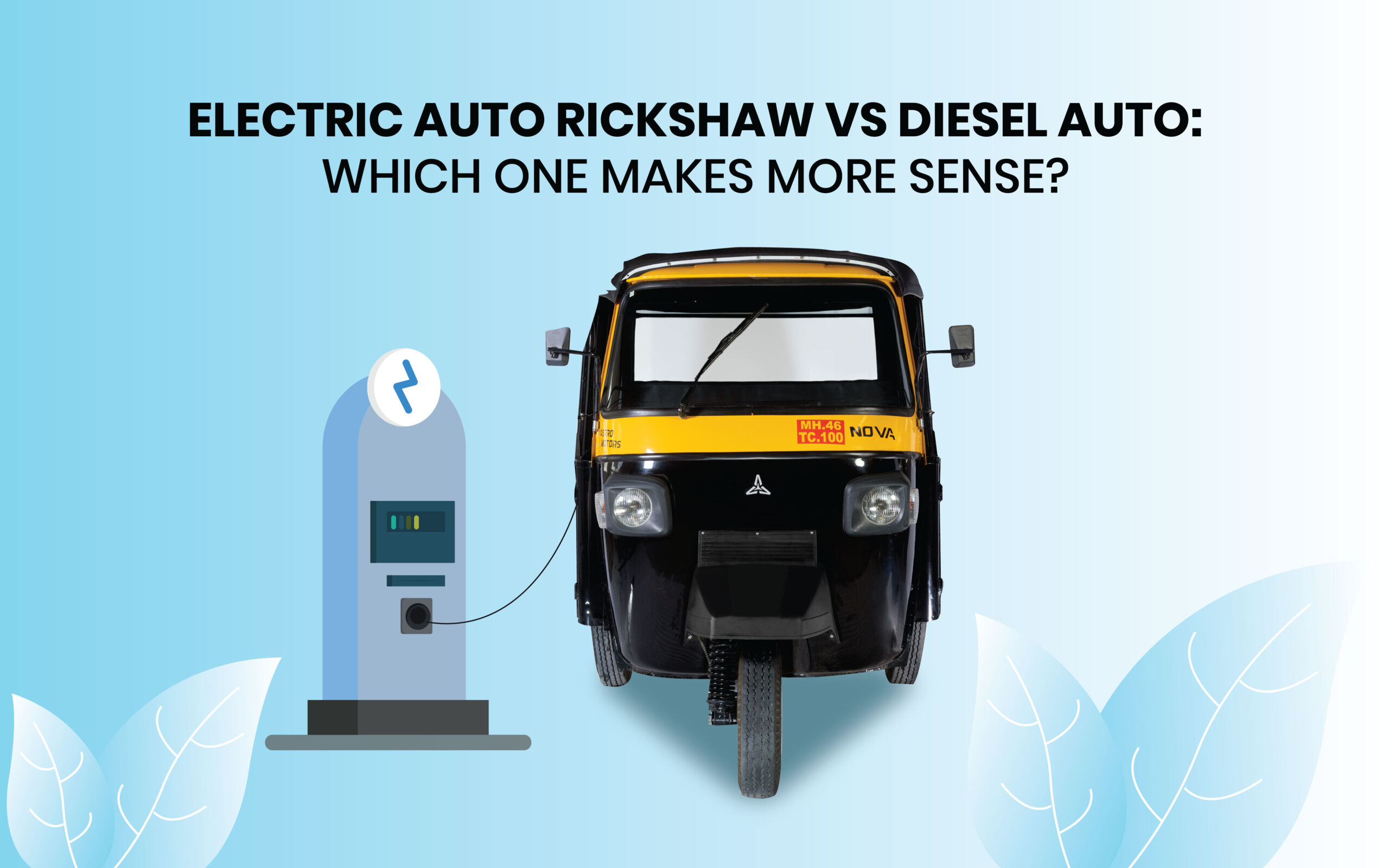
Electric Auto Rickshaw vs Diesel Auto: Which One Makes More Sense?
Choosing between an electric auto rickshaw and a diesel auto today depends on operating costs, route patterns, and how consistently the vehicle performs in daily use.
Key Takeaways: Electric Auto vs Diesel Auto
- Electric autos significantly reduce daily fuel and maintenance expenses
- Diesel autos remain relevant for long, uninterrupted routes
- EV autos suit city and semi-urban operations better
- Charging discipline is as important as fuel access
- Well-engineered EV autos like Astro Nova highlight how modern electric autos are closing traditional performance gaps
Electric Auto vs Diesel Auto: Why This Comparison Matters Today
Until recently, diesel autos were the default choice across most Indian cities. That’s changing quickly.
With fuel prices rising and electric vehicle technology becoming more mature, many operators now seriously evaluate electric auto rickshaw vs diesel auto rickshaw before investing.
The decision is usually influenced by:
- Daily kilometres covered
- Route predictability
- Downtime tolerance
Powertrain Differences That Impact Daily Operations
At a mechanical level:
- A diesel auto relies on combustion and multiple moving parts
- An electric auto runs on a battery and electric motor
In everyday use, this difference shows up in smoother driving, lower vibration, and reduced noise in EV autos. Operators who have shifted to modern electric models often mention lower fatigue, especially during long city shifts.
EV autos like Astro Nova, built with higher payload tolerance and stable power delivery, demonstrate how electric platforms are no longer limited to short or light-duty use.
Electric Auto Rickshaw vs Diesel Auto Rickshaw: Running Cost Comparison
Running costs are where most operators feel the impact almost immediately.
| Cost Factor | Electric Auto Rickshaw | Diesel Auto |
| Energy / Fuel Cost per km | ₹0.9 – ₹1.2 | ₹3 – ₹3.5 |
| Routine Maintenance | Minimal | Regular |
| Oil & Filter Changes | Not required | Required |
| Workshop Downtime | Low | Higher |
Over time, operators using EV autos consistently report better control over monthly expenses.
Also, Explore Electric Auto vs Petrol Auto – Price Comparison
Maintenance Reality on Indian Roads
Diesel autos typically require:
- Engine oil servicing
- Clutch replacements
- Gearbox attention
- Exhaust maintenance
Electric auto rickshaws remove many of these pain points. Fewer moving parts mean fewer unexpected breakdowns. This is particularly noticeable in newer EV autos that are designed with commercial payloads in mind, rather than light-duty applications.
Things to Consider While Buying an Electric Auto Rickshaw in 2026
Performance in Traffic and Real Routes
City Driving & Stop-Go Conditions
Electric autos have a natural advantage here:
- Instant torque for quicker pickup
- Regenerative braking in traffic
- No gear shifting
Drivers transitioning from diesel often point out that EV autos feel easier to manage in congested city routes.
Longer Routes & Continuous Running
Diesel autos still perform well on longer, uninterrupted routes where refuelling is quick and charging options are limited.
That said, higher-capacity EV auto rickshaws—such as Astro Nova with its larger battery and rated payload handling—are increasingly capable of covering extended daily distances without mid-shift disruptions.
Mileage vs Range: Practical Differences in Daily Use
- Diesel autos depend on fuel quality and engine condition
- Electric auto range depends on battery size, load, and driving style
Operators using EV autos value the predictability of daily range, especially when battery capacity is aligned with real payload demands.
Electric Auto Rickshaw Mileage Explained
Comfort, Noise & Driver Fatigue
Electric autos offer:
- Lower noise levels
- Minimal vibration
- Reduced heat build-up
Over a full working day, these factors contribute to lower driver fatigue. This is an area where EV autos clearly differ from diesel vehicles, regardless of route length.
Environmental & Regulatory Perspective
Electric autos:
- Produce zero tailpipe emissions
- Are better aligned with evolving city mobility policies
- Face fewer future restrictions
Diesel autos, while still permitted, may face increasing regulatory scrutiny in urban areas over time.
Where Electric Auto Rickshaws Make More Sense
Electric auto rickshaws work best when:
- Routes are predictable
- Overnight charging is feasible
- Operations are city or semi-urban based
Modern EV autos designed for commercial use—rather than retrofitted solutions—are now capable of full-day operations.
Where Diesel Autos Still Hold Ground
Diesel autos remain suitable for:
- Long highway-linked routes
- Areas with limited charging infrastructure
- Operators who prefer quick refuelling over planned charging
However, even in these cases, running cost differences are becoming harder to ignore.
Ownership Cost Over Time: A Realistic View
Over a 3–5 year period:
- Electric autos usually cost less to operate
- Maintenance savings compound steadily
- Fuel cost volatility is eliminated
Many operators find that the financial break-even arrives sooner than expected.
FAQs: Electric Auto Rickshaw vs Diesel Auto
Which is cheaper to run—electric auto or diesel auto?
Electric auto rickshaws are significantly cheaper due to lower energy and maintenance costs.
Are electric autos reliable for daily commercial use?
Yes. Modern EV auto rickshaws designed for commercial payloads are built for consistent daily operation.
Do diesel autos still offer better range?
Diesel autos suit uninterrupted long routes, but high-capacity EV autos are narrowing the gap.
What about resale value?
Resale for electric autos is improving as adoption increases and product reliability becomes proven.
Is charging still a challenge?
With planned overnight charging, most city-based operators manage operations smoothly.
Conclusion
When comparing electric auto rickshaw vs diesel auto, the choice depends on how the vehicle is used—not just what it costs upfront. For city and semi-urban operations, electric autos now offer clearer economic and operational advantages. Diesel autos still serve specific needs, but the balance is shifting as EV technology matures.
EV autos like Astro Nova reflect this shift, showing how electric platforms can meet real-world commercial demands without compromising on daily usability.