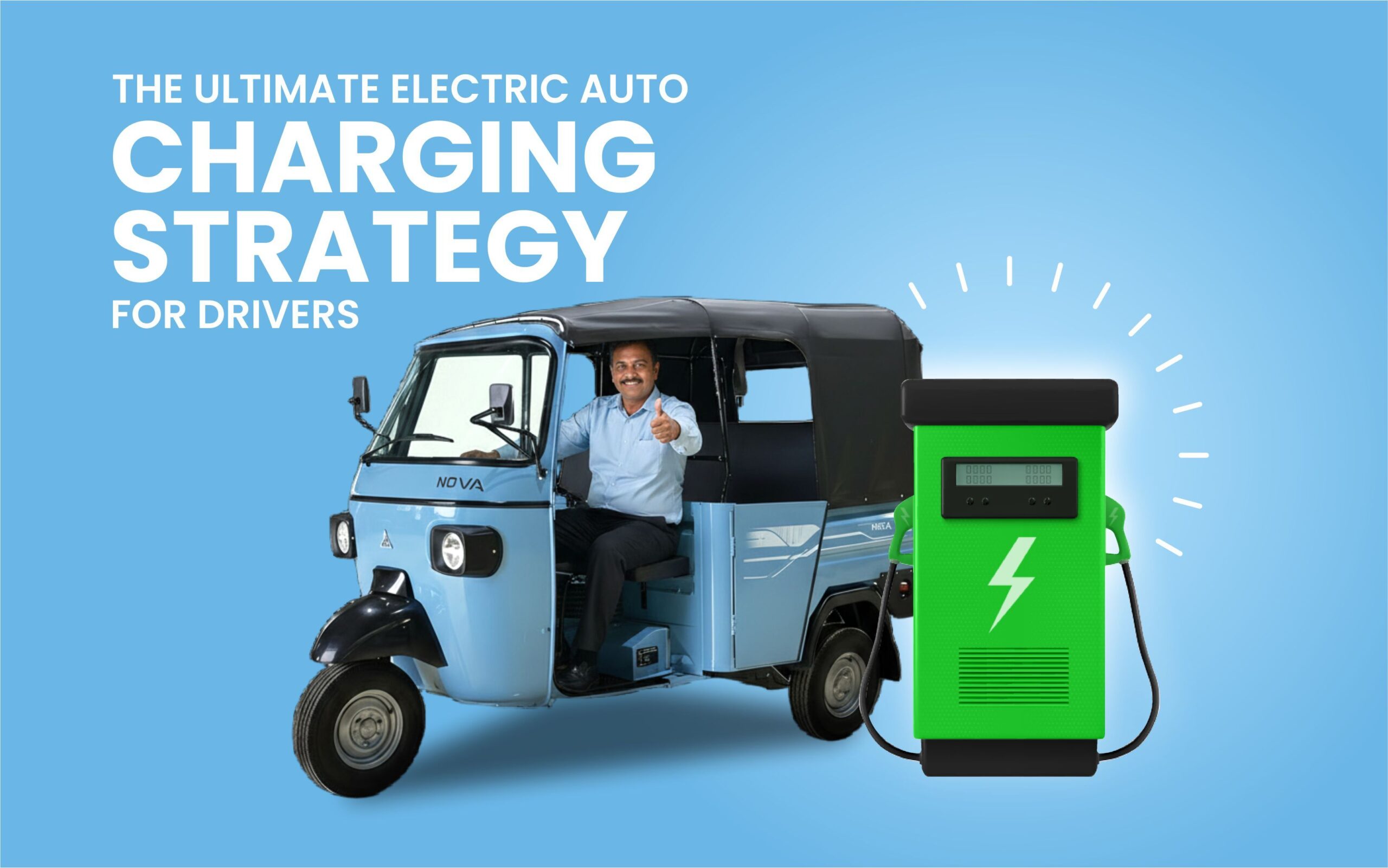
Charge Smart, Earn More: The Ultimate Electric Auto Charging Strategy for Drivers
Smart charging isn’t just about powering your vehicle—it’s about maximizing earnings, reducing downtime, and getting the most out of every charge.
Key Takeaways
- A strong electric auto charging strategy can increase daily earnings by reducing downtime
- Combining home charging and opportunity charging improves efficiency
- Smart charging habits extend battery life and improve range consistency
- Understanding fast charging vs home charging helps optimize costs and usage
- Planning charging around routes can help avoid income loss
Why Charging Strategy Matters for Electric Auto Drivers
If you’re driving an electric auto rickshaw, your earning potential depends on one thing:
How efficiently you manage your battery.
Many drivers focus only on range.
But experienced drivers know this:
It’s not just about how far you go—it’s about how little time you spend not earning.
That’s where a smart electric auto charging strategy makes all the difference.
1. Understand Your Daily Driving Pattern First
Before choosing a charging method, understand your usage.
Ask Yourself
- How many kilometers do you drive daily?
- When are your peak earning hours?
- When do you usually take breaks?
Example
If you drive mostly during peak hours (8–11 AM and 5–9 PM), your charging should happen during low-demand periods.
This is the foundation of the best charging strategy for electric auto drivers.
2. Home Charging: The Most Cost-Effective Option
Home charging is still the most affordable way to charge your battery auto rickshaw.
Benefits of Home Charging
- Lower electricity cost
- Stable charging environment
- Better for long-term battery health
Best Practices
- Charge overnight during off-peak hours
- Avoid frequent overcharging
- Use certified charging equipment
Home charging works best as your primary charging method.
3. Electric Auto Fast Charging vs Home Charging
Understanding the difference is critical.
Comparison Table
| Factor | Home Charging | Fast Charging |
| Cost | Low | Higher |
| Speed | Slow (6–8 hrs) | Fast (1–2 hrs) |
| Battery Impact | Minimal stress | Higher stress if overused |
| Usage | Daily charging | Emergency/top-up |
Key Insight
Fast charging is useful—but should not be your default.
Use it strategically, not regularly.
4. Opportunity Charging: The Hidden Advantage
One of the smartest EV auto charging tips is to use small charging windows.
What is Opportunity Charging?
Charging your e rickshaw during short breaks.
Examples
- During lunch break
- While waiting at a stand
- Between trips
Even 30–45 minutes of charging can add meaningful range.
This reduces the need for long charging sessions later.
Guide to electric auto rickshaw battery life
5. Plan Charging Around Low-Demand Hours
Charging during peak earning hours means lost income.
Smart Strategy
| Time Slot | Action |
| Early Morning | Drive |
| Midday (Low Demand) | Charge |
| Evening Peak | Drive |
This approach helps you avoid downtime in electric auto operations.
6. Avoid Deep Discharge and Overcharging
Battery health directly affects both range and charging efficiency.
EV Auto Battery Care Tips
- Don’t let battery drop below 20% frequently
- Avoid charging to 100% every time
- Maintain a healthy charging cycle (20%–80%)
This improves both battery life and performance consistency.
7. EV Auto Battery Swapping Benefits
Battery swapping is emerging as an alternative charging solution.
What is Battery Swapping?
Instead of charging, you replace your depleted battery with a fully charged one.
Benefits
- Zero waiting time
- No downtime
- Consistent daily operation
Limitations
- Availability depends on location
- May involve subscription costs
For high-usage drivers, EV auto battery swapping benefits can be significant.
8. Choose Vehicles with Higher Battery Capacity
A smart charging strategy starts with the right vehicle.
For example, the Astro Nova Electric Rickshaw offers:
- Battery: 10.24 kWh
- Range: Up to 220 km*
- Payload: 435 kg
- Top Speed: 55 km/h
A higher battery capacity means:
- Fewer charging interruptions
- More trips per day
- Greater earning potential
9. Reduce Charging Frequency with Efficient Driving
Charging strategy isn’t just about when you charge—it’s also about how often you need to charge.
Tips to Reduce Charging Frequency
- Drive smoothly
- Maintain optimal speed
- Avoid unnecessary load
- Reduce idling
Fewer charging cycles mean more time on the road.
10. Monitor Charging Efficiency and Costs
Track your charging habits like you track your earnings.
What to Monitor
- Units consumed per charge
- Cost per charge
- Range achieved per charge
This helps you optimize your electric auto charging guide India strategy over time.
Real-Life Example: Smart Charging vs Random Charging
Let’s compare two drivers.
Driver Comparison
Driver A (Unplanned Charging)
- Charges during peak hours
- Faces downtime
- Lower daily income
Driver B (Smart Charging Strategy)
- Charges during low-demand hours
- Uses opportunity charging
- Maintains consistent availability
Result:
Driver B earns 15–25% more daily simply by managing charging better.
Internal Resources You May Find Useful
- EV Auto Battery Replacement Planning Guide
- Electric Rickshaw Maintenance Cost Breakdown
- EV Auto Driving Tips to Increase Range
Conclusion
Charging is not just a routine—it’s a strategy.
When you follow a smart electric auto charging strategy, you reduce downtime, improve efficiency, and maximize your daily income.
By combining home charging, opportunity charging, and efficient driving habits, you can ensure your electric auto rickshaw is always ready when demand is highest.
Charge smart.
Drive more.
Earn more.
FAQs
What is the best charging strategy for electric auto drivers?
The best strategy combines home charging, opportunity charging, and charging during low-demand hours to minimize downtime.
How to charge electric auto efficiently?
Charge during off-peak hours, avoid overcharging, and maintain a healthy battery cycle between 20% and 80%.
Is fast charging good for electric auto rickshaws?
Fast charging is useful for emergencies but should not be used frequently as it can stress the battery.
What are EV auto battery swapping benefits?
Battery swapping eliminates charging time, reduces downtime, and allows continuous operation.
How to avoid downtime in electric auto operations?
Plan charging during low-demand hours, use opportunity charging, and maintain battery health.