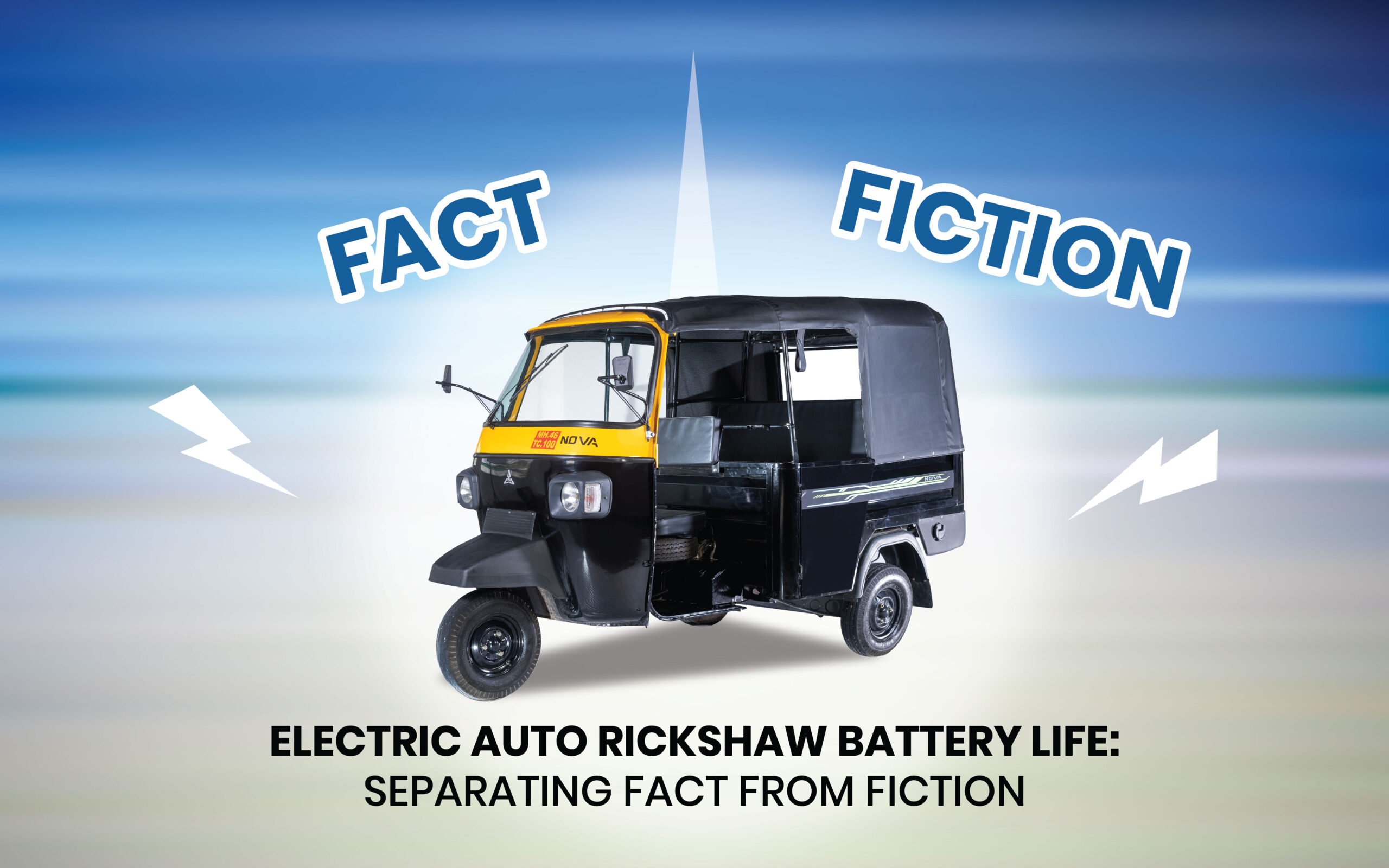
Electric Auto Rickshaw Battery Life: Separating Fact from Fiction
Worried about electric auto rickshaw battery life? Let’s separate facts from myths and understand how long modern EV auto batteries truly last.
Key Takeaways
- Electric auto rickshaw battery life depends on battery type, usage pattern, and maintenance.
- Modern lithium-ion batteries typically last 4–6 years or 1,200–1,800 cycles.
- Charging habits, load, and driving style significantly impact electric rickshaw battery life.
- A higher-capacity battery (like 10.24 kWh) supports longer range and improved durability.
- Proper maintenance can increase EV auto battery life by 20–30%.
Understanding Electric Auto Rickshaw Battery Life
Electric auto rickshaw battery life refers to the duration a battery performs efficiently before significant degradation. It is measured in charge cycles, not just years.
One charge cycle means charging from 0–100%. Most modern electric rickshaw batteries are designed to deliver over 1,200 full cycles, depending on chemistry and build quality.
For commercial users of electric auto and battery auto rickshaw models, this directly impacts profitability and operating cost.
Electric Rickshaw Battery Life: Lead-Acid vs Lithium-Ion
Historically, most e auto rickshaw models used lead-acid batteries. Today, lithium-ion batteries dominate the EV auto segment.
Battery Comparison Table
| Parameter | Lead-Acid Battery | Lithium-Ion Battery |
| Lifespan | 1–2 years | 4–6 years |
| Charge Cycles | 300–500 | 1,200–1,800 |
| Maintenance | High | Low |
| Charging Time | 8–10 hrs | 3–5 hrs |
| Weight | Heavy | Lightweight |
| Efficiency | Moderate | High |
Lithium-ion significantly improves electric auto battery life, reduces downtime, and increases range consistency.
Modern electric rickshaw manufacturers increasingly prefer lithium-ion for long-term performance and reliability.
EV Auto Battery Life: What Really Affects It?
Battery life in an electric auto rickshaw is not fixed. It depends on real-world conditions.
1. Depth of Discharge (DoD)
Frequent full discharges strain the battery. Operating between 20–80% charge improves EV auto battery life.
2. Charging Behavior
Overcharging or using low-quality chargers reduces battery efficiency. Smart BMS (Battery Management Systems) prevent overheating and voltage imbalance.
3. Payload & Driving Style
Consistently carrying heavy loads affects energy consumption. For example, vehicles engineered for higher payload capacity handle stress better.
The Astro Nova Electric Rickshaw (E Rickshaw) supports a payload of 435 kg, designed to operate efficiently without overstraining the battery system.
4. Temperature Conditions
Extreme heat accelerates battery degradation. Quality thermal management extends electric auto battery life.
5. Battery Capacity
Higher kWh capacity reduces strain per kilometer. A larger battery doesn’t just mean longer range — it often improves lifecycle durability.
Astro Nova’s 10.24 kWh lithium battery supports a certified range of 220 km*, helping reduce deep discharge cycles in daily operations.
Myth vs Fact: Electric Rickshaw Battery Life
| Myth | Fact |
| EV batteries die in 1–2 years | Lithium-ion batteries last 4–6 years |
| Fast charging ruins batteries | Controlled fast charging with BMS is safe |
| Higher speed reduces battery life drastically | Consistent high-speed driving impacts range, not lifespan significantly |
| Replacement is extremely expensive | Lifecycle savings outweigh fuel costs over time |
Understanding these distinctions helps operators make informed investment decisions in electric auto rickshaw models.
Electric Auto Battery Life: Real-World Example
Consider a commercial electric rickshaw running 150 km daily.
With a 220 km range battery system, like that of Astro Nova Electric Rickshaw, the vehicle avoids deep discharge. This improves battery health and maintains consistent performance over years.
Lower daily strain means better EV auto battery life and predictable operating cost.
Estimated Battery Life Timeline (Lithium-Ion)
| Year | Expected Performance |
| Year 1 | 100% efficiency |
| Year 2–3 | 95–90% capacity |
| Year 4–5 | 85–80% capacity |
| Year 6+ | Gradual decline; possible replacement planning |
Proper servicing can extend this timeline further.
How to Extend Electric Rickshaw Battery Life
- Avoid complete discharge.
- Use manufacturer-approved chargers.
- Maintain optimal tire pressure (reduces load strain).
- Avoid overloading beyond rated payload.
- Park in shaded areas during peak heat.
- Schedule periodic battery diagnostics.
Professional-grade electric auto models with advanced BMS systems offer better protection against voltage fluctuation and overheating.
Why Modern Electric Auto Rickshaw Design Matters
Battery life is not just about the battery. It depends on:
- Motor efficiency
- Controller calibration
- Vehicle weight distribution
- Regenerative energy systems
The Astro Nova Electric Rickshaw is engineered as a next-generation electric auto, balancing power and efficiency to maximize usable battery life without compromising top speed (55 kmph).
A well-matched motor-battery combination reduces unnecessary drain and improves overall electric auto battery life.
Cost Perspective: Fuel vs Battery Replacement
| Factor | Diesel Auto | Electric Auto Rickshaw |
| Daily Fuel Cost | High | Minimal electricity cost |
| Maintenance | Frequent engine servicing | Lower moving parts |
| Battery Replacement | NA | Once in 4–6 years |
| Long-Term ROI | Moderate | High |
While battery replacement is an upfront consideration, lifecycle savings make electric rickshaw ownership financially viable.
Frequently Asked Questions (FAQ)
1. How long does an electric auto rickshaw battery last?
Lithium-ion batteries typically last 4–6 years or 1,200–1,800 charge cycles, depending on usage and maintenance.
2. Does higher speed reduce electric auto battery life?
Driving consistently at top speed impacts range per charge but does not drastically shorten battery lifespan if managed properly.
3. How much does it cost to replace an electric rickshaw battery?
Costs vary based on capacity and brand. However, lithium-ion batteries offer better lifecycle savings compared to fuel expenses.
4. Can overloading damage the battery?
Yes. Exceeding rated payload increases strain. Choosing a vehicle with higher payload capacity ensures balanced energy consumption.
5. Is lithium-ion better than lead-acid for EV auto battery life?
Yes. Lithium-ion offers longer lifespan, faster charging, lighter weight, and better efficiency.
Internal Reads You May Find Useful
- How Electric Auto Rickshaws Reduce Operating Costs
- Lithium-Ion vs Lead-Acid Batteries in Electric Rickshaw
- Total Cost of Ownership of an Electric Auto
Conclusion
Electric auto rickshaw battery life is often misunderstood. With lithium-ion technology, smart charging, and responsible usage, EV auto battery life can extend beyond five years.
Modern electric auto models like Astro Nova Electric Rickshaw demonstrate how battery capacity, vehicle engineering, and payload optimization work together to enhance durability and range.
For operators evaluating a battery auto rickshaw, understanding real battery science is key to making a profitable, future-ready mobility investment.
Range may vary based on driving conditions, payload, and terrain.