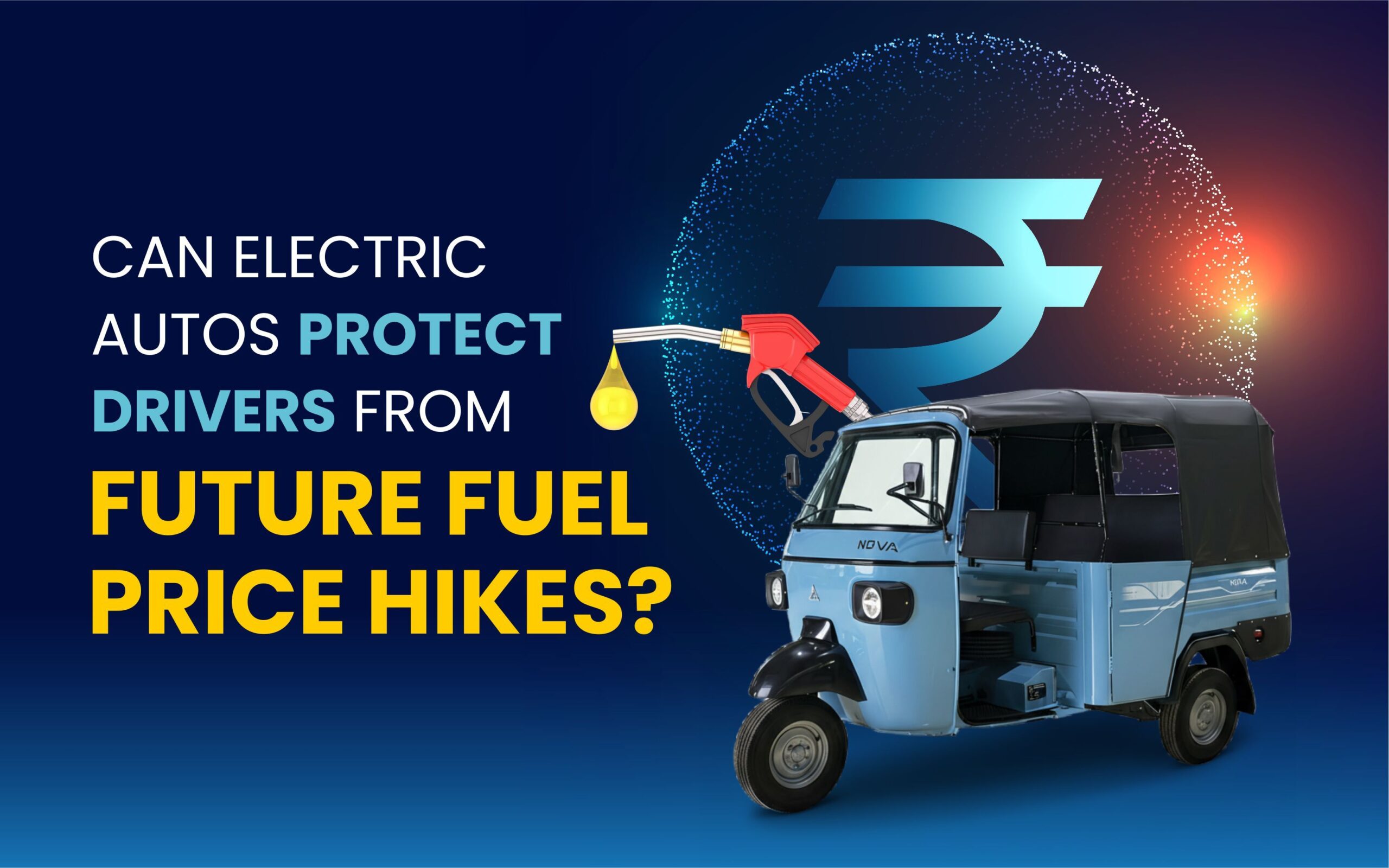
Can Electric Autos Protect Drivers from Future Fuel Price Hikes?
Fuel prices have become one of the biggest concerns for drivers and fleet operators across India. Whether it is petrol, diesel, or CNG, transportation costs continue to fluctuate due to global oil market conditions, geopolitical tensions, taxation policies, and supply chain disruptions.
For auto drivers who rely on their vehicles for daily income, every increase in fuel prices directly impacts profitability. As operating costs rise, drivers often find themselves earning less despite working the same number of hours.
This challenge has led many drivers and transport businesses to explore Electric Autos as a more stable and cost-effective alternative. With lower running costs, reduced maintenance requirements, and protection from fuel price volatility, electric mobility is rapidly transforming India’s transportation sector.
Why Fuel Price Hikes Are a Major Concern for Drivers
Fuel expenses represent one of the largest operating costs for auto drivers.
Several factors contribute to rising fuel prices:
- Global crude oil market fluctuations
- Supply chain disruptions
- International conflicts affecting oil exports
- Government taxes and duties
- Increasing transportation demand
Even a small increase in fuel prices can significantly affect a driver’s monthly earnings.
For example, a driver covering 80–120 kilometers per day may spend a substantial portion of daily revenue on fuel alone. Over time, these costs can reduce profitability and create financial uncertainty.
This is one of the primary reasons why many drivers are turning toward electric mobility.
The Rise of Electric Autos in India
India is witnessing rapid adoption of electric three-wheelers and passenger EVs.
Industry reports indicate that electric three-wheelers are among the fastest-growing EV categories in the country. Their popularity is driven by:
- Lower operating costs
- Government incentives
- Increasing charging infrastructure
- Rising fuel prices
- Growing environmental awareness
Electric Autos are becoming a preferred choice for both individual drivers and fleet operators seeking long-term savings.
How Electric Autos Help Reduce Running Costs
One of the most significant electric auto benefits is the reduction in daily operating expenses.
Lower Energy Costs
Electric vehicles operate on battery power rather than petrol, diesel, or CNG.
Charging an electric auto generally costs considerably less than refueling a conventional vehicle for the same distance traveled.
This translates into:
- Lower cost per kilometer
- Improved profit margins
- Greater income stability
For drivers who operate throughout the day, these savings can accumulate significantly over the course of a year.
Predictable Operating Expenses
Fuel prices are influenced by external economic factors and can change frequently.
Electricity prices, however, tend to be more stable and predictable.
This allows drivers to:
- Better estimate operating costs
- Plan monthly budgets effectively
- Avoid sudden financial pressure caused by fuel price increases
Reduced Maintenance Means More Savings
Another important advantage of Electric Autos is their simplified mechanical design.
Unlike conventional vehicles, electric autos do not require:
- Engine oil changes
- Fuel filters
- Exhaust system maintenance
- Complex engine repairs
Since electric motors contain fewer moving components, maintenance costs are generally lower.
Benefits include:
- Reduced servicing expenses
- Less downtime
- Improved vehicle reliability
- Higher operational efficiency
For commercial drivers, keeping a vehicle on the road means maximizing earning potential.
Greater Protection Against Future Fuel Price Volatility
One of the strongest arguments for switching to Electric Autos is protection from future fuel price hikes.
Fuel Prices Are Unpredictable
Global oil markets are affected by:
- Economic conditions
- International conflicts
- Production decisions
- Supply shortages
These factors can cause fuel prices to rise unexpectedly.
Electric Mobility Provides Stability
Electric vehicles reduce dependence on fossil fuels and help drivers avoid the uncertainty associated with fuel markets.
By switching to an electric auto, drivers gain:
- More predictable operating costs
- Greater financial control
- Improved long-term profitability
This stability becomes increasingly valuable as fuel prices continue to fluctuate.
Environmental Benefits of Electric Autos
In addition to financial advantages, Electric Autos contribute to cleaner transportation.
Zero Tailpipe Emissions
Electric vehicles produce no direct exhaust emissions.
This helps reduce:
- Air pollution
- Greenhouse gas emissions
- Urban environmental damage
Improved Urban Air Quality
Cities across India are actively encouraging EV adoption to improve air quality and reduce pollution levels.
Drivers who switch to electric mobility contribute to a healthier environment while benefiting from lower operating costs.
Government Support Is Accelerating EV Adoption
The Indian government has introduced several initiatives to promote electric vehicle adoption.
These include:
- EV purchase incentives
- State-level subsidies
- Charging infrastructure expansion
- Policy support for clean mobility
Such initiatives are making Electric Autos increasingly accessible and affordable for drivers.
As charging networks continue to grow, the convenience of owning an electric vehicle is expected to improve further.
Why Electric Autos Are a Smart Long-Term Investment
When evaluating vehicle ownership costs, drivers should consider more than the purchase price.
The total cost of ownership includes:
- Fuel expenses
- Maintenance costs
- Repair expenses
- Vehicle downtime
Although the upfront investment may vary, Electric Autos often provide significant long-term savings through lower operating costs.
For drivers planning to remain in the transportation sector for years to come, electric mobility can offer a stronger financial foundation.
The Future of Driver Mobility in India
India’s transportation industry is undergoing a major transformation.
With increasing urbanization, environmental concerns, and rising fuel prices, electric mobility is expected to become the preferred choice for passenger transportation.
Manufacturers like Astro Motors are helping drive this transition by offering reliable, efficient, and cost-effective electric vehicle solutions tailored to Indian roads and operating conditions.
Drivers who embrace electric mobility today can position themselves for long-term success in an evolving transportation landscape.
Conclusion
Fuel price volatility is likely to remain a challenge for drivers in the coming years. As transportation costs continue to rise, finding sustainable and affordable alternatives becomes increasingly important.
Electric Autos offer a practical solution by reducing running costs, lowering maintenance expenses, and minimizing dependence on fluctuating fuel prices. For drivers seeking greater profitability, financial stability, and environmental responsibility, electric mobility represents a smart investment in the future.
FAQs
1. How do Electric Autos help drivers save money?
Electric Autos reduce fuel and maintenance expenses, resulting in lower overall operating costs.
2. Are Electric Autos cheaper to operate than fuel-powered autos?
Yes. Electricity generally costs less than petrol, diesel, or CNG, making Electric Autos more economical to run.
3. Can Electric Autos protect against future fuel price hikes?
Yes. Since they operate on electricity rather than fossil fuels, they are less affected by fuel price fluctuations.
4. What are the main electric auto benefits?
Key benefits include lower running costs, reduced maintenance, environmental sustainability, and predictable operating expenses.
5. Are Electric Autos suitable for daily passenger transportation?
Absolutely. Modern Electric Autos are designed for daily commercial operations and urban transportation needs.